
Mary Delany
Botanist, Collage Innovator, and Late-Life Artist
Mary Delany (14 May 1700 – 15 April 1788) was an English artist, letter-writer, and member of the intellectual Bluestocking circle, best known for creating intricately detailed botanical collages she called “paper mosaicks”. Although she had artistic interests all her life, Delany’s most remarkable work came late — beginning at age 72 — and stands as a testament to creativity’s timelessness. (British Museum)
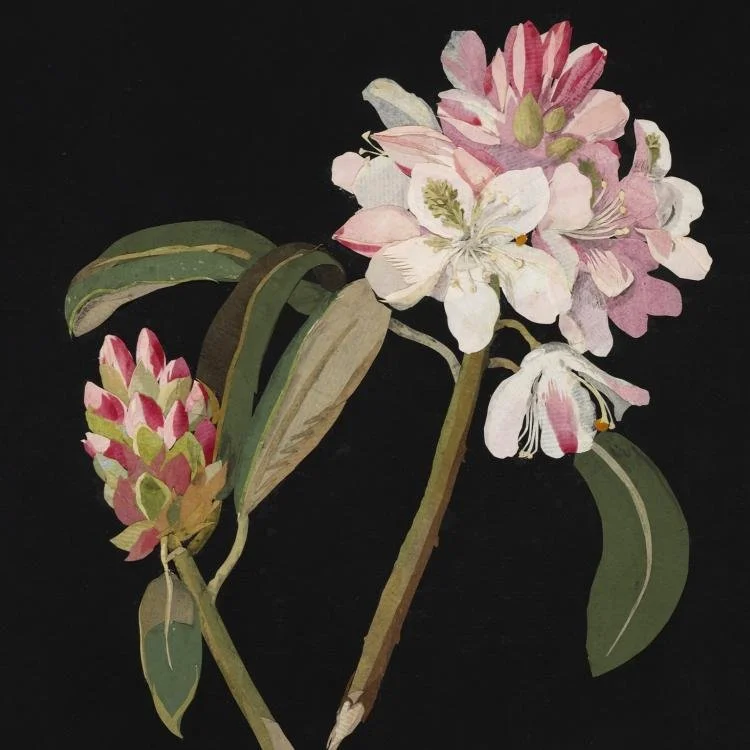
Mary Delany – Rhododendron Maximum, paper collage on black background, 1778. British Museum blog & collection.
Born into an aristocratic English family, Mary received a broad education in languages, music, drawing, and embroidery. She moved in courtly and artistic circles, befriending influential figures such as the composer George Frideric Handel. Two marriages and periods of widowhood marked her early adulthood, but it was after the death of her second husband in 1768 that her artistic focus deepened. (British Museum)
The “Paper Mosaicks”: a new artistic voice
In 1771, during a stay with her close friend Margaret Bentinck, Duchess of Portland, Mary Delany noticed a similarity between a flower petal and a scrap of colored paper — an observation that sparked her defining creative breakthrough. She began cutting tiny pieces of hand-dyed tissue paper and layering them to form botanical images with astonishing precision. These she pasted onto black paper, creating works that many mistook for watercolors rather than collages. (British Museum)
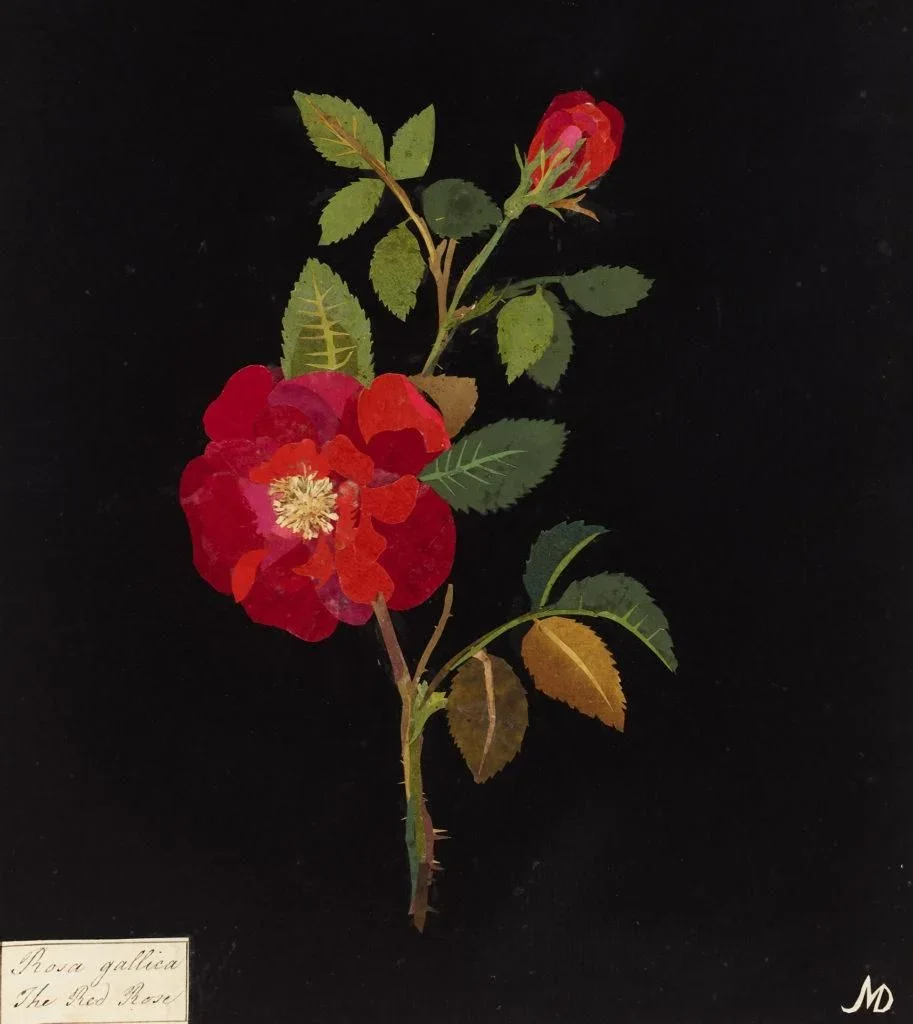
Mary Delany – Rosa Gallica, cut paper collage, 1782. British Museum blog
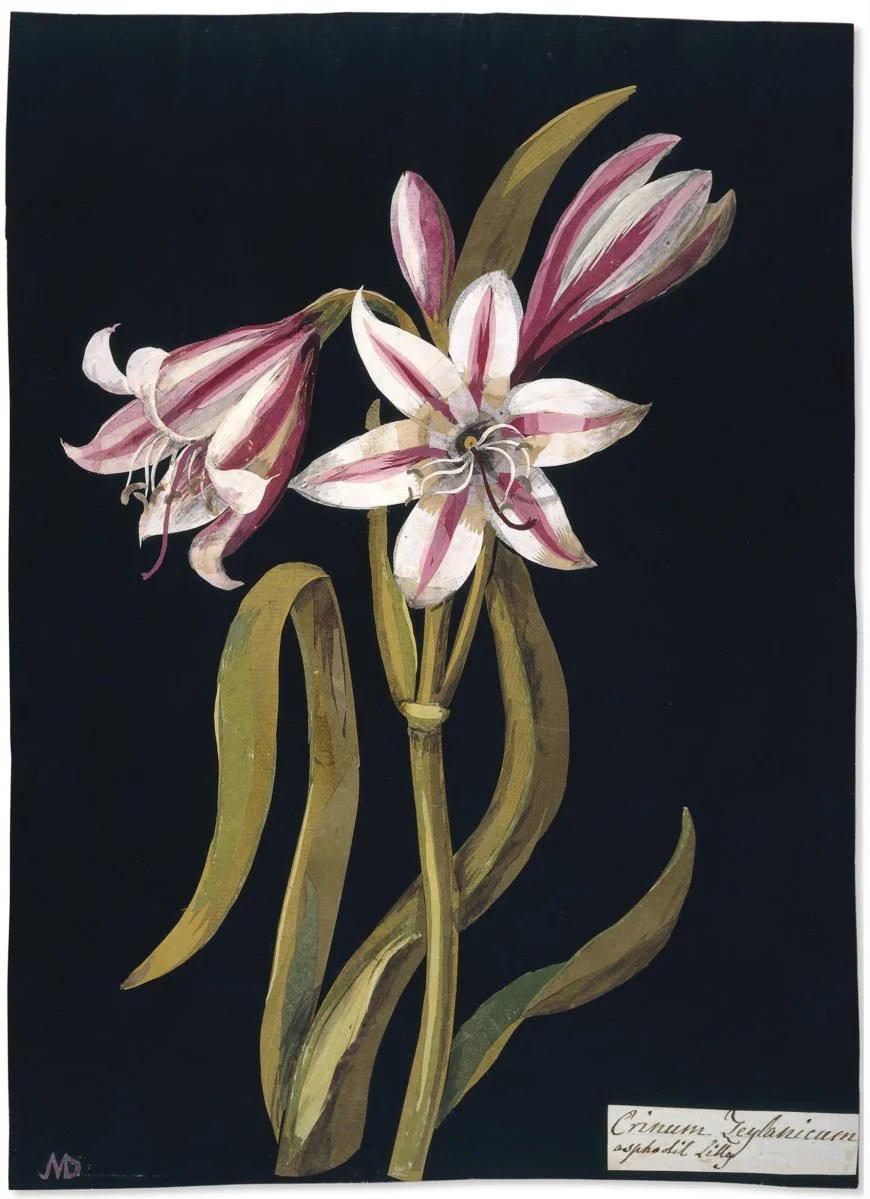
Delany’s botanical paper collage – delicate petals and layered shading. Khan Academy
Delany produced nearly 1,000 individual botanical collages over roughly a decade, a series now known as Flora Delanica. Her compositions are meticulously accurate: she labeled each work with both the Linnaean scientific name and the common name, recorded the specimen’s source, and noted the date and location of creation. (British Museum)
Unlike conventional botanical illustrations of the time, which were often painted or etched, Delany’s works emerged from a novel technique she invented, predating mainstream collage by more than a century. (British Museum)
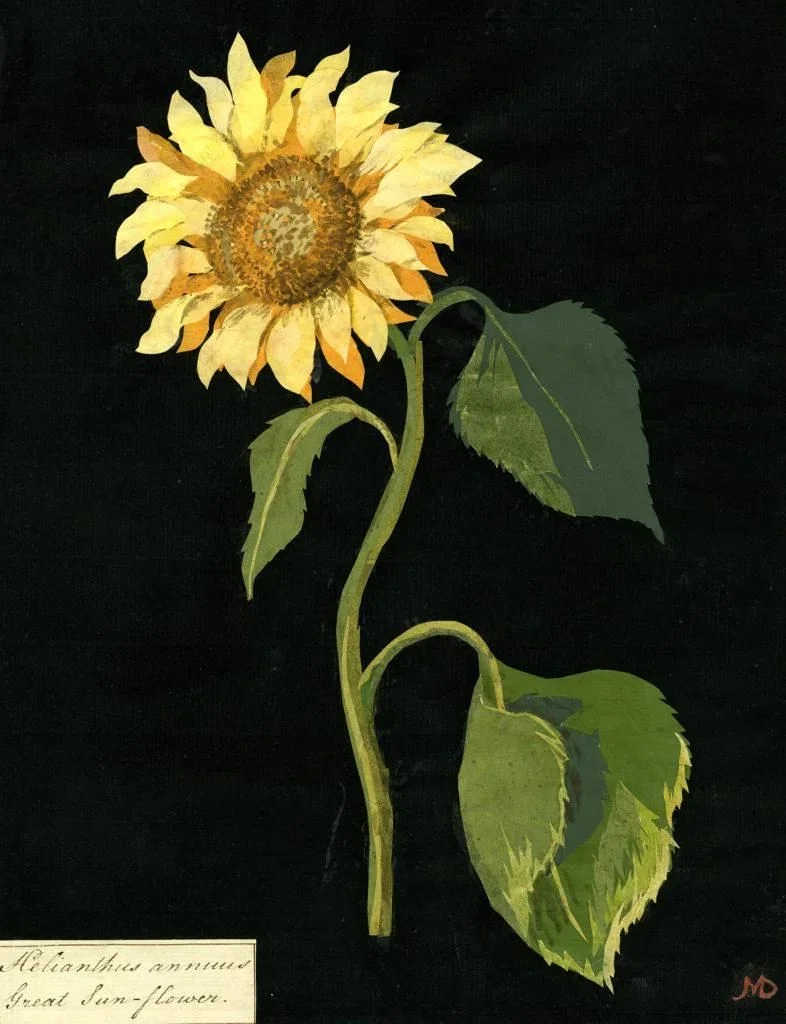
Mary Delany – Helianthus Annuus (Great Sunflower), botanical paper art. British Museum online
Style and Message
Delany’s collages are more than decorative studies — their scientific exactitude places them at the intersection of art and natural history. Botanists of her day, such as Sir Joseph Banks, praised her work as among the most faithful imitations of nature ever produced. (Smarthistory)
Her use of vibrant, layered paper on stark black backgrounds not only heightened visual drama but also signaled a deep respect for plant life as both aesthetic and scientific subject matter. The works demonstrate how detailed observation — long valued in scientific study — can be seamlessly fused with artistic expression. (DailyArt Magazine)
Delany’s paper mosaicks also challenge assumptions about age and creativity. Beginning this signature work in her seventies, she quietly rejected the idea that innovation belongs only to youth, reminding us that artistic breakthroughs can bloom at any stage of life. (British Museum)
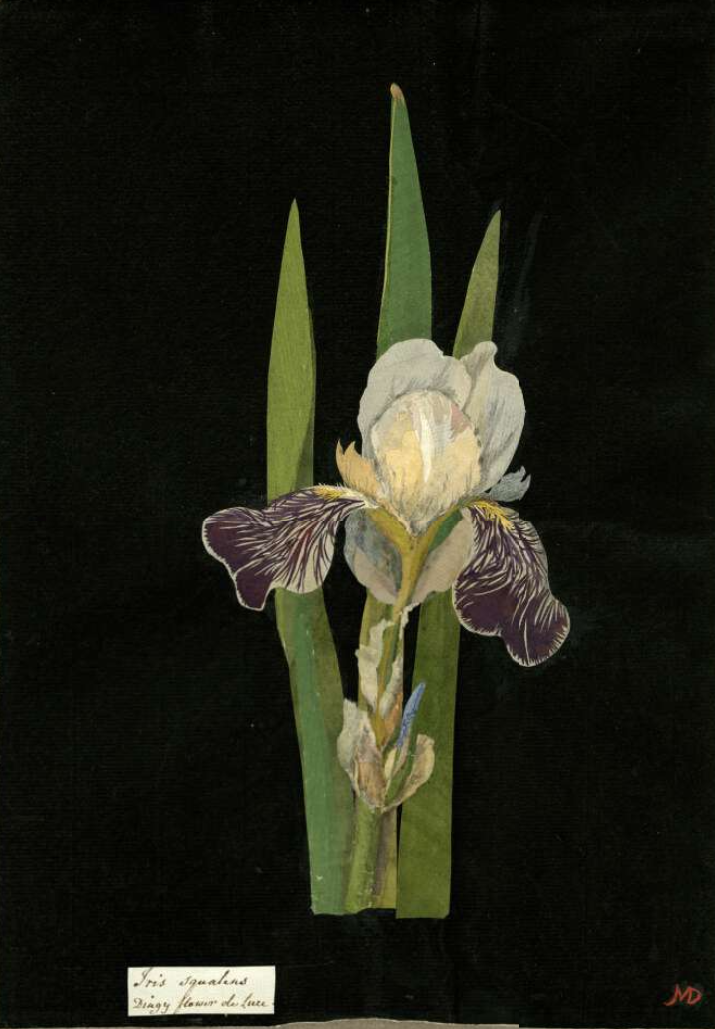
Botanical Iris rendered in paper collage by Mary Delany. TORCH Oxford
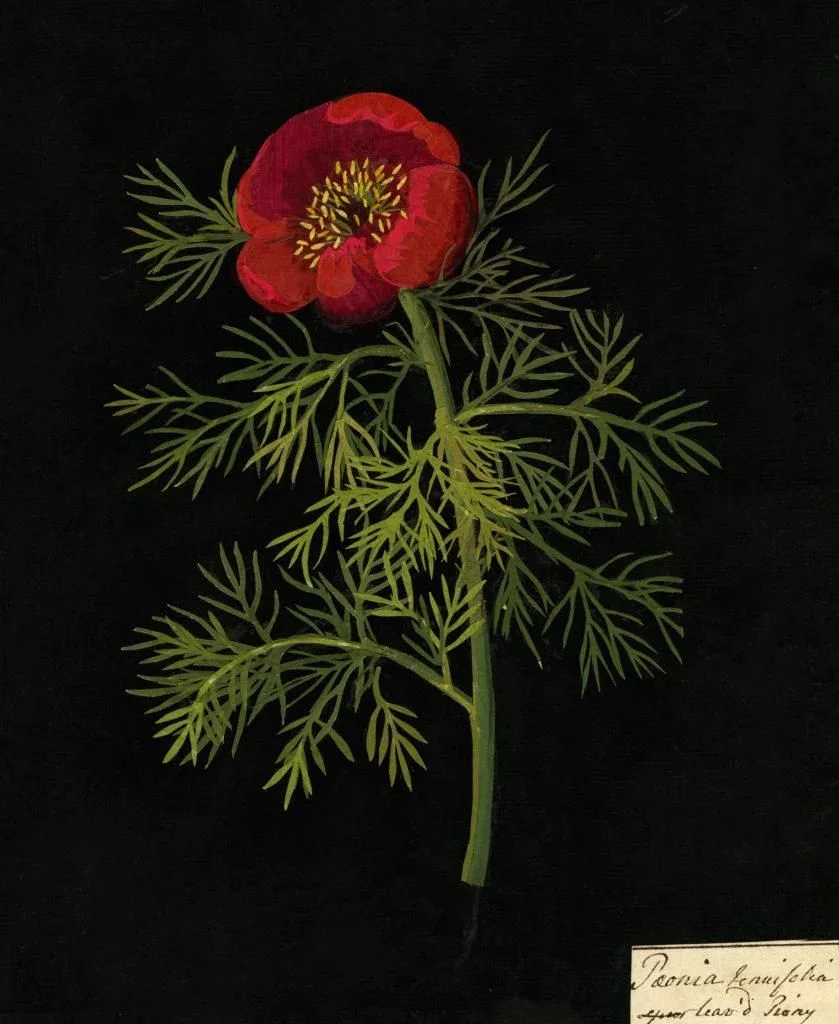
Delany’s intricate wildflower collage on black background. British Museum blog
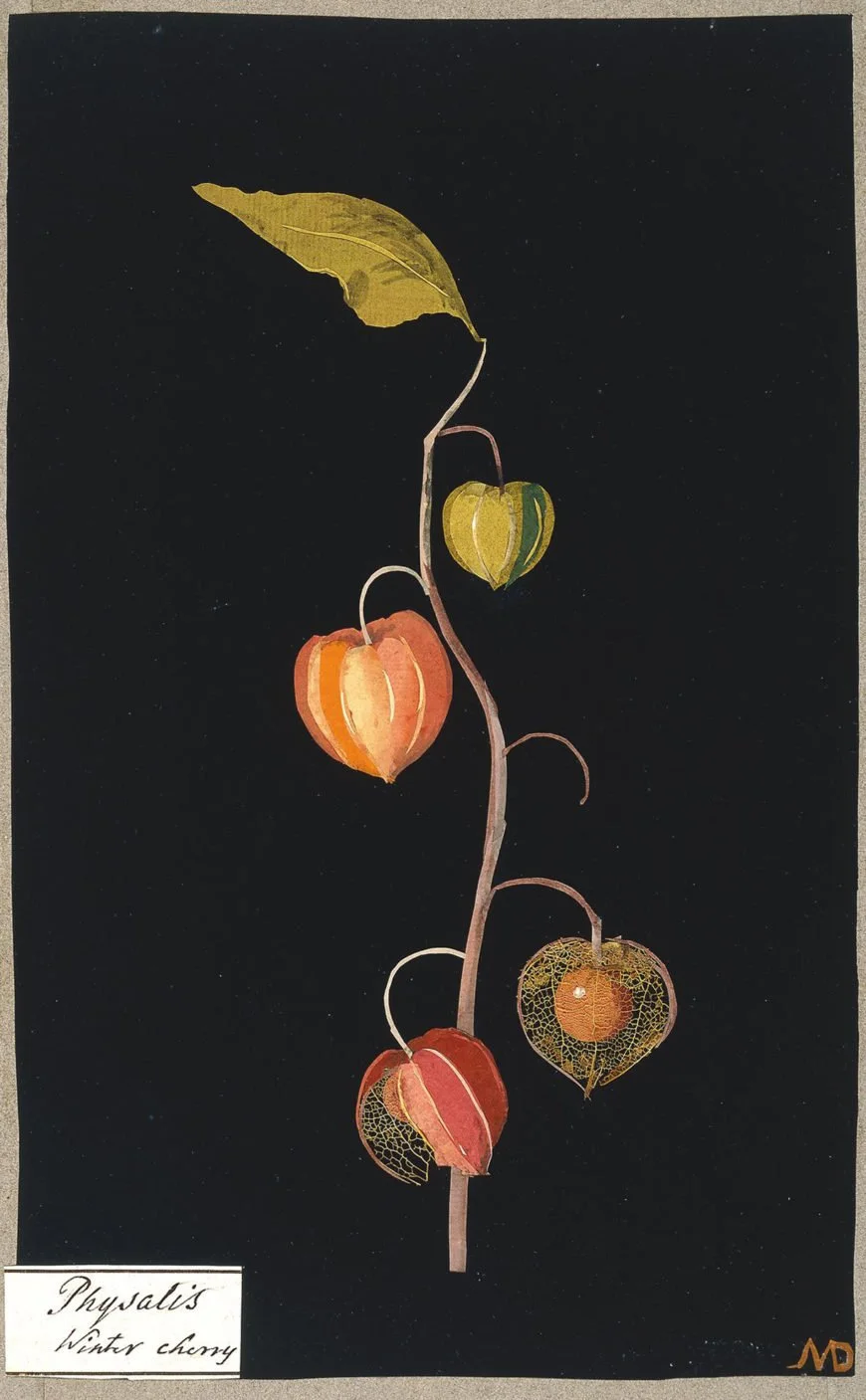
Early Delany collage of Physalis with hanging lantern-like pods. Khan Academy
Legacy and Influence
Mary Delany’s artistic legacy lies in the unique blend of precision and beauty in her botanical collages. Most of her surviving works are preserved in the British Museum, where they continue to be studied and admired for their craftsmanship and scientific relevance. (British Museum)
Her story also enriches art history by illustrating the significant but often under-recognized contributions of women artists in the 18th century, especially those whose work spanned disciplines — from design and embroidery to natural science and collage. (britishart.yale.edu)
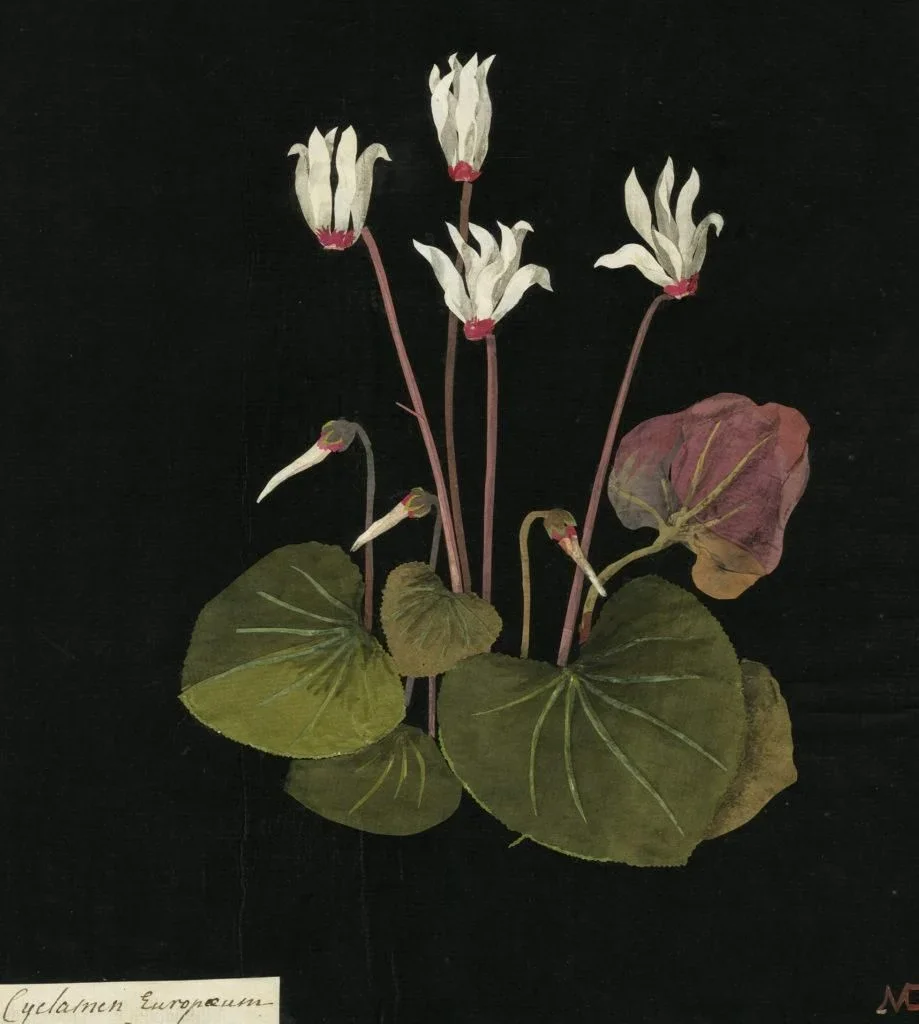
Cyclamen Europaeum paper collage by Mary Delany (1777). British Museum blog
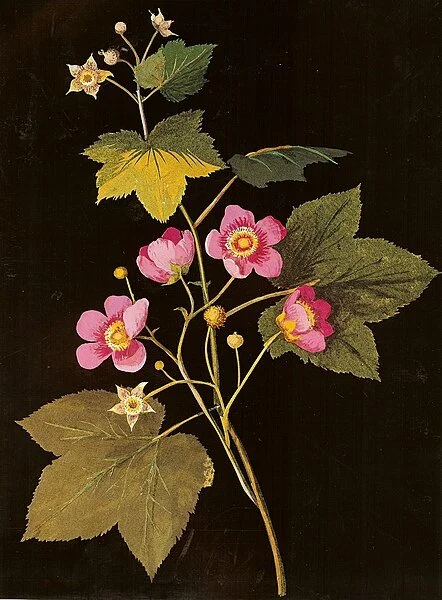
Flowering Raspberry (Rubus odoratus) in paper collage, Mary Delany. Suzanne’s Mom’s Blog.
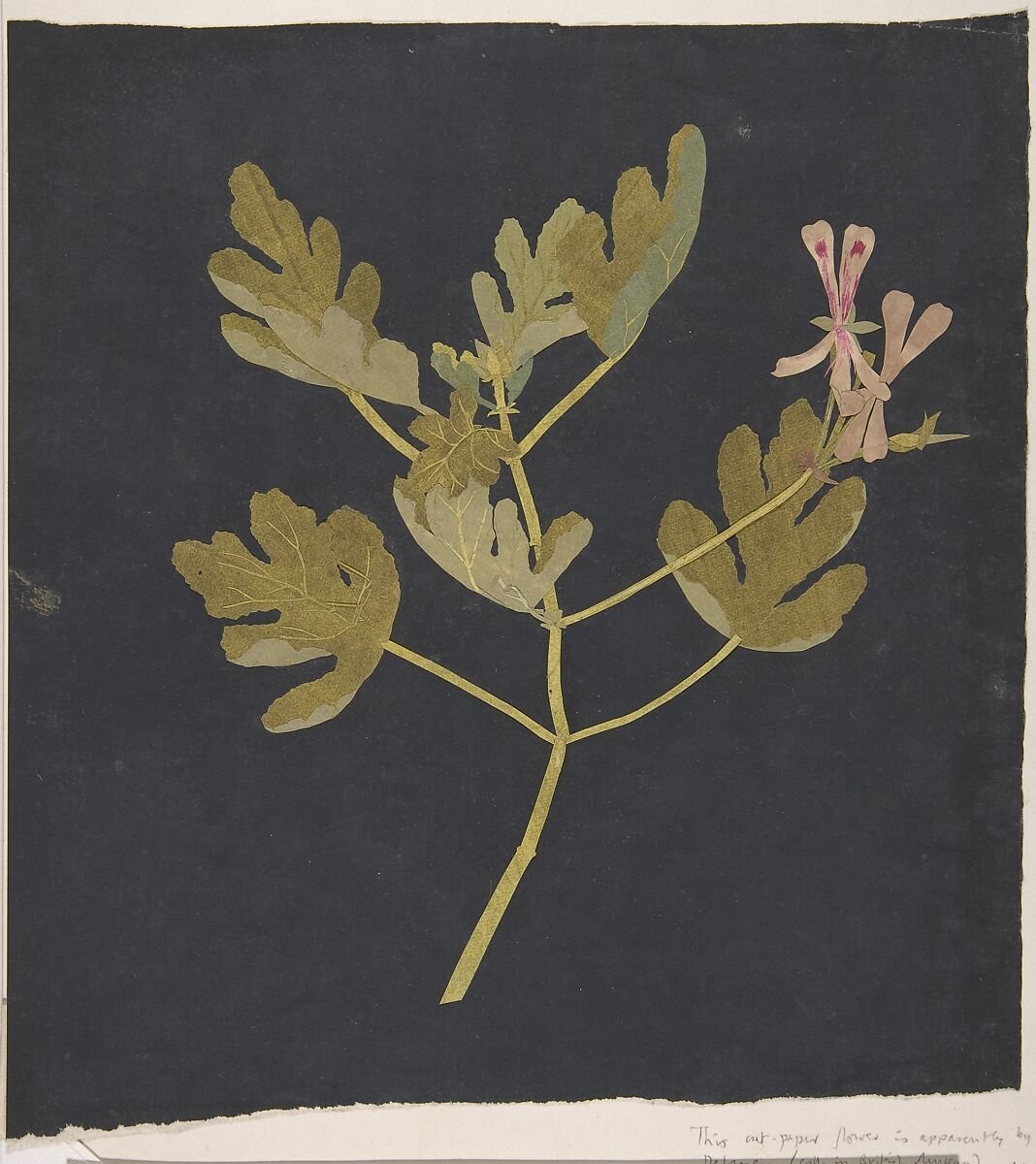
Botanical Study collage by Mary Delany, circa 1772–1782. The Metropolitan Museum of Art
Citations
British Museum: Mary Delany biography and Flora Delanica overview. (British Museum)
Wikipedia: Life, context, and legacy of Mary Delany. (Wikipedia)
Smarthistory (British Museum / education): “Mary Delany and cut flowers” — technique and historical context. (Smarthistory)
DailyArt Magazine: Her collaging methods and stylistic details. (DailyArt Magazine)
